
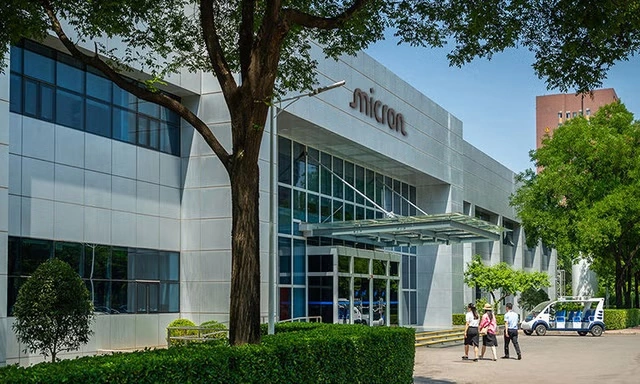
Micron Technology today released its financial results for the third fiscal quarter of 2026 (September 28, 2025 – September 26, 2026). The report shows that the company’s total revenue reached a record $41.5 billion (approximately RMB 282.217 billion at the current exchange rate), a 74% increase sequentially and a staggering 346% increase year-over-year, marking the fifth consecutive quarter of record revenue; gross margin soared to 84.9%. Micron expects fourth-quarter revenue to reach a record $50 billion (plus or minus $1 billion), with a gross margin of approximately 86%.
At the company’s third-quarter earnings call on June 24, local time, Micron Technology Chairman and CEO Sanjay Mehrotra stated that capital expenditures for the fourth fiscal quarter are expected to be approximately $10 billion, and total capital expenditures for fiscal year 2026 are expected to be approximately $27 billion. Capital expenditures for each quarter of fiscal year 2027 will be higher than those in the fourth fiscal quarter of 2026.
Micron has signed 16 Strategic Customer Agreements (SCAs) with customers in the data center, consumer, and automotive markets, including four hyperscale customers and three mid-sized customers. Based on the minimum prices and minimum shipment volumes stipulated in the contracts, the guaranteed revenue corresponding to future performance obligations (RPO) has reached $100 billion.
Micron Technology also stated that it has signed memory chip customer orders worth $22 billion, the vast majority of which (approximately $18 billion) will be in the form of cash deposits.
Micron Technology executives stated that the storage capacity of humanoid robots is approximately 10 times that of L2+ autonomous vehicles, and the market is expected to begin a large-scale, decades-long cycle of memory demand starting in the latter half of this decade (ending in 2030).
Micron Technology stated that the development of its next-generation DRAM and NAND nodes is progressing well, and mass production is expected to begin in the second half of 2027. The production ramp-up rate for the 12-layer HBM4 product is currently twice that of the 12-layer HBM3E. The company has already shipped over $1 billion worth of HBM4 products.
Melotra predicts that the memory supply shortage will continue beyond 2027, stating that “the performance of AI systems is architecturally dependent on the performance and capacity of the memory subsystem. This elevates memory’s status in the AI world, making it a strategic asset.”